


Articles
Insights & Analysis
Expert perspectives on cloud computing, digital transformation, and the future of enterprise technology
286 Articles
5 Featured
Weekly Updates



All Articles
Showing 1–12 of 286 articles
AI readiness for UK businesses before buying licences or building agents
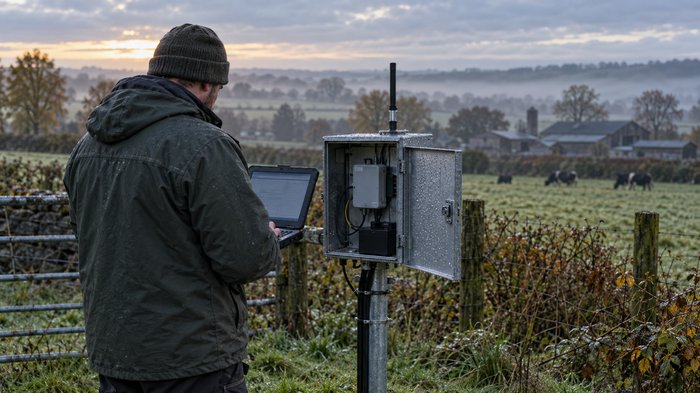
A UK AI readiness assessment should connect a specific task to usable data, product prerequisites, operating responsibilities and costs. Businesses should receive a documented pilot decision that separates mandatory requirements from preparation work and additional agent permissions.

How Copilot+ PCs run company AI offline in the UK
Copilot+ PCs can support useful offline tasks when the application, model and required files are available locally. UK businesses should test a complete disconnected workflow, obtain an itemised quotation and establish responsibility for the planned November 2026 model replacement.

Which UK business software could Smart Data change first?
Accounting and cash-flow software provide the clearest existing foundation for Smart Data, while wider sector schemes remain under assessment. Metro Bank’s documented Xero connection shows the account, timing, historical-record and cost checks UK businesses can make today.

What a 500 MW AI data centre means for local suppliers
A 500 MW AI data centre can create opportunities for UK fibre, electrical and IT suppliers, but the headline capacity does not establish funded local contracts. Suppliers should qualify each project's connection programme, procurement route, responsibilities and payment milestones before committing resources.

Check existing Dell, HPE and Lenovo servers before adding AI
UK IT teams should verify the exact server configuration, software requirements and site capacity before approving an AI retrofit. This guide sets out the ownership, cost, testing and rollback evidence needed to decide whether reuse is suitable.

Why Scotland, Cumbria and North East England could attract more data centre investment
Scotland, Cumbria and North East England could attract data centre investment through potential energy advantages and improved grid connections. Smaller businesses should assess available services, total costs and delivery evidence before moving workloads.

What the UK’s next digital adoption package means for technology buyers
The supplied government update promises a new digital adoption package but does not establish its final funding or application terms. Small businesses should assess existing targeted support and compare technology options against implementation costs, operating responsibilities and measurable needs.

What an NPU can actually do on a business laptop
An NPU provides dedicated processing for supported local AI features, including translation, image generation and meeting effects. UK businesses should compare complete laptops against real workloads and support costs before paying for an upgrade.

Accounting platforms for UK mandatory e-invoicing
Xero offers the clearest documented UK pilot route in the available evidence, while Sage and connectors merit consideration for businesses retaining existing accounting systems. Buyers should verify exact editions, invoice workflows, costs and update commitments before assuming future compliance.

Which business laptops and phones can use Wi-Fi 7?
Dell’s UK catalogue provides named Wi-Fi 7 laptop candidates, while the available phone shortlist requires manufacturer-level verification. UK businesses should confirm exact configurations, budget for deployment and test devices under their normal network security controls.

What Smart Data could mean for UK software suppliers’ APIs
UK software suppliers should assess customer-data access, permissions and operational responsibilities without assuming a universal Smart Data API mandate. Existing interfaces and delivery partners should be judged against documented requirements, with future scheme assumptions kept explicit.

Cisco, HPE Aruba, Ubiquiti and RUCKUS Wi-Fi 7 for UK businesses
This comparison examines the available Wi-Fi 7 evidence for Cisco, HPE Aruba, Ubiquiti and RUCKUS without inventing equivalent prices or performance rankings. It explains how UK businesses can compare installation costs, management responsibilities and support against practical acceptance tests.